


Professor
BA, chemistry, 1976
PhD, physics, 1980 Cambridge
University
Contact
Info
Marks Research Group
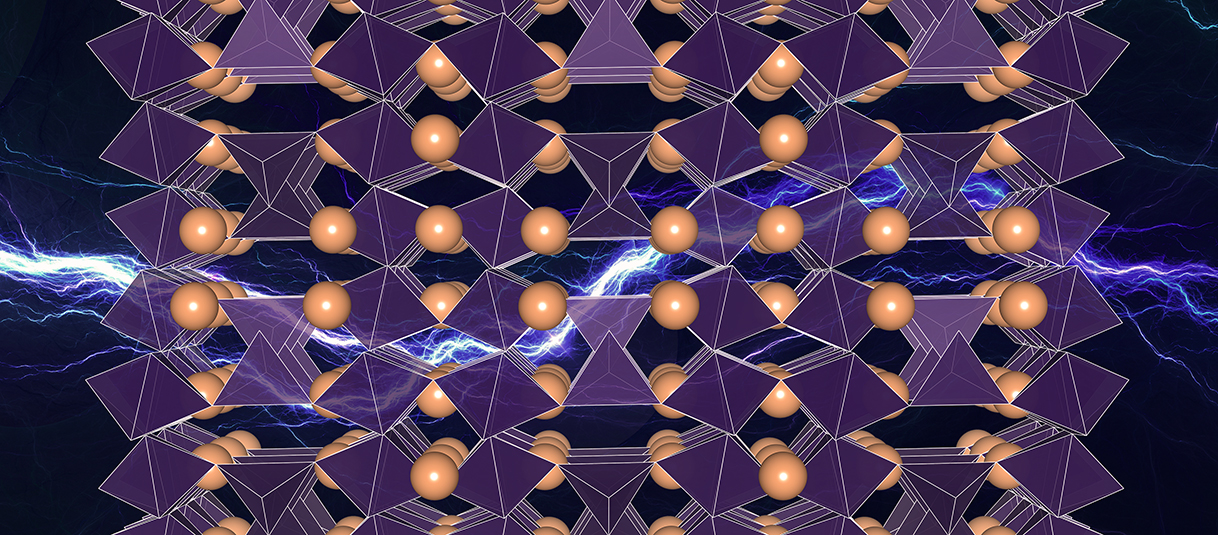
Materials at the Nanoscale
We need to develop the paradigms for materials when the carbon
cost becomes a critical issue. Much of the research we do focuses on some
of the fundamental scientific questions central to many energy related problems,
for instance:
- How do we engineer a concrete/cement that requires less energy to produce?
- How do we reduce frictional losses which are estimated to cost about
5% of the GDP of most countries?
- How do we improve on catalysts, for instance increasing the selectivity
of partial oxidation reactions?
- Can we improve on Solid Oxide Fuel Cells so we can produce electricity
directly from hydrocarbons with high efficiency
- How do we understand oxide surfaces, and as we do how do we engineer
desirable surface structures?
See our web page for more
details. Current projects include:
- Catalysis: The work we do combines a wide range of
different techniques from growth of single crystals through solving the
surface structures, examining how the materials behave as catalysis in
practice to theoretical modelling of the surfaces. Our aim is to bridge
what is called the "Materials Gap", connecting what is taking
place on large, single crystal surfaces under controlled conditions with
controlled nanoparticles of oxides used as catalysts.
- Solid Oxide Fuel Cells: The basic premise of this
project is that the significantly enhanced electronic and ionic transport
properties of nano-scale oxides, combined with the high surface area of
nano-porous materials, offer an opportunity to address electrode polarization
and conductivity issues limiting low-temperature SOFC performance.
- Density Functional Modelling: A critical component
for understanding the properties of materials, and enabling the development
of new materials is the ability to characterize them in detail as well
as understand why they form. While this may appear to be a combination
of two disparate concepts, in many respects they are not and should be
considered as synergistic. Approached from the characterization side, better
tools allow one to answer more fundamental scientific questions about why
a particular structure is formed. Approached from the other side, the underlying
scientific questions can drive what types of characterization is needed.
Frequently the underlying science can be best revealed by theoretical calculations,
particularly density functional calculations which despite some limitations
can probe many important questions.
- Nanotribology: The importance of controlling friction
and wear through structure, materials selection and lubrication was realized
since the time of the construction of the pyramids. It was first formulated
and documented scientifically by Leonardo Da Vinci 200 years before Newton
defined the laws of force and mechanics, making tribology one of the oldest
fields of scientific study. Despite this, only a fragmented understanding
of the fundamental mechanisms of friction exists.
- Nanoplasmonics: Nanoplasmonics is the study of localized
surface plasmon resonance (LSPR), i.e. collective electron oscillations,
in nanoparticles. By using correlated single particle spectroscopy and
transmission electron microscopy, it is possible to study the effect of
shape and size on plasmonic properties without having to use ensemble averaged
data.
Awards
Sloan Foundation Fellowship, 1987
Burton Medal from the Electron Microscopy Society of America for achievements
in electron microscopy by a young researcher, 1989
Fellow, American Physical Society, 2002
Selected Publications, more here
Tran, F., J. Kunes, P. Novak, P. Blaha, L.D. Marks, and K. Schwarz, Force
calculation for orbital-dependent potentials with FP-(L)APW plus lo basis
sets. Computer Physics Communications, 2008. 179(11): p. 784-790.
Wang, Y., S.K. Eswaramoorthy, L.J. Sherry, J.A. Dieringer, J.P. Camden,
G.C. Schatz, R.P.V. Duyne, and L.D. Marks, A method to correlate optical
properties and structures of metallic nanoparticles Ultramicroscopy, 2008.
109(9): p. 1110-1113.
Widjaja, E.J. and L.D. Marks, Models for quasicrystal-crystal epitaxy. Journal
of Physics-Condensed Matter, 2008. 20(31): p. 314003.
Ciston, J., A. Subramanian, I.K. Robinson, and L.D. Marks, Diffraction refinement
of localized antibonding at the Si(111) 7x7 surface. Physical Review B, 2009.
79(19).
Lanier, C.H., A.N. Chiaramonti, L.D. Marks, and K.R. Poeppelmeier, The Fe3O4
origin of the "Biphase" reconstruction on alpha-Fe2O3(0001). Surface
Science, 2009. 603(16): p. 2574-2579.
Enterkin, J., A. Subramanian, M. Castell, K.R. Poeppelmeier, and L.D.
Marks, Structure of the SrTiO3 (110) 3x1 surface. Nature Materials, 2010
Ringe, E., R.P. Van Duyne, and L.D. Marks, Wulff Construction for Alloy Nanoparticles. Nano Letters, 2011. 11(8): p. 3399-3403.
Liao, Y., R. Pourzal, M.A. Wimmer, J.J. Jacobs, A. Fischer, and L.D. Marks, Graphitic Tribological Layers in Metal-on-Metal Hip Replacements. Science, 2011. 334(6063): p. 1687-1690.
Kienzle, D.M., A.E. Becerra-Toledo, and L.D. Marks, Vacant-Site Octahedral Tilings on SrTiO3 (001), the (root 13 x root 13)R33.7 degrees Surface, and Related Structures. Physical Review Letters, 2011. 106(17): p. 176102.
Henry, A.I., J.M. Bingham, E. Ringe, L.D. Marks, G.C. Schatz, and R.P. Van Duyne, Correlated Structure and Optical Property Studies of Plasmonic Nanoparticles. Journal of Physical Chemistry C, 2011. 115(19): p. 9291-9305.
Enterkin, J.A., K.R. Poeppelmeier, and L.D. Marks, Oriented Catalytic Platinum Nanoparticles on High Surface Area Strontium Titanate Nanocuboids. Nano Letters, 2011. 11(3): p. 993-997.
Bierschenk, D.M., E. Potter-Nelson, C. Hoel, Y.G. Liao, L. Marks, K.R. Poeppelmeier, and S.A. Barnett, Pd-substituted (La,Sr)CrO(3-delta)-Ce(0.9)Gd(0.1)O(2-delta) solid oxide fuel cell anodes exhibiting regenerative behavior. Journal of Power Sources, 2011. 196(6): p. 3089-3094.